
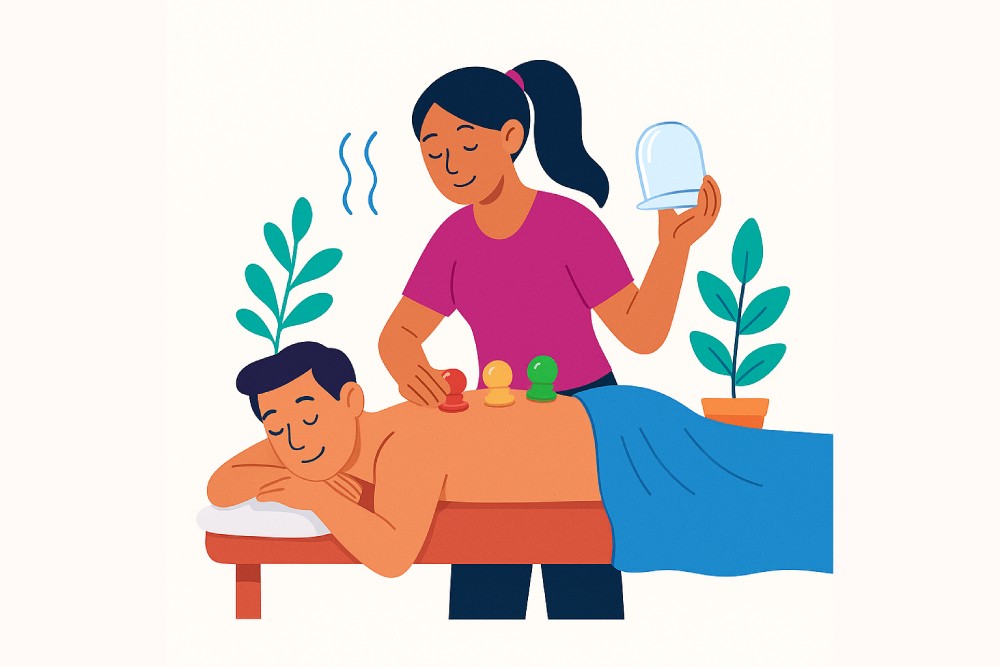
Massage and Cupping Therapy is a powerful combination of traditional massage techniques and ancient cupping methods. This holistic approach helps relieve pain, reduce inflammation, promote blood flow, and deeply relax the body and mind.
What is Cupping Therapy?
Cupping is an ancient therapy originating from Chinese and Middle Eastern traditions. It involves placing suction cups on the skin to create negative pressure, which lifts tissue and promotes healing.
How It Works:
- A therapist places cups on specific areas of the body (typically back, shoulders, or legs).
- The cups create suction—either using heat (fire cupping) or a mechanical pump.
- Cups are left in place for 5–15 minutes or used in gliding motions for massage-like effects.
Benefits of Cupping:
Improves skin tone and elasticity
Stimulates blood and lymph flow
Removes toxins from the body
Relieves muscle soreness and stiffness
Reduces inflammation
Promotes relaxation and well-being
What is Massage Therapy?
Massage therapy involves the manipulation of the body’s soft tissues using hands, fingers, elbows, or specialized tools. It is one of the oldest healing traditions used to:
- Reduce muscle tension
- Improve circulation
- Alleviate stress and anxiety
- Enhance lymphatic drainage
- Support overall wellness
Common Types of Massage Offered:
Trigger Point Therapy – Focuses on tight muscle fibers that cause pain in other parts of the body.
Swedish Massage – Gentle, relaxing strokes to ease tension and improve circulation.
Deep Tissue Massage – Targets deeper layers of muscles for chronic pain and knots.
Aromatherapy Massage – Combines massage with essential oils for emotional and physical healing.
Combined Benefits of Massage & Cupping
Using massage and cupping together provides deeper therapeutic results than either therapy alone:
- Loosens tight muscles more effectively
- Breaks up fascia adhesions and scar tissue
- Enhances detoxification
- Provides relief from chronic pain (e.g., back pain, fibromyalgia)
- Supports recovery from sports injuries
- Reduces stress and enhances energy flow
Conditions It Can Help With
This therapy is especially beneficial for individuals dealing with:
- Muscle tension or chronic pain
- Headaches or migraines
- Anxiety and depression
- Digestive issues
- Joint pain or stiffness
- Respiratory issues (e.g., congestion, asthma symptoms)
What to Expect During a Session
- A brief consultation to understand your needs and health history
- A customized massage using specific techniques tailored to you
- Application of cups on targeted areas
- Some temporary marks or discoloration (cupping marks), which fade within a few days
- A feeling of deep relaxation and release post-treatment
Aftercare Tips
To maximize the benefits of your session:
- Drink plenty of water to help flush toxins
- Rest and avoid strenuous activity for 24 hours
- Keep the cupped areas covered and warm
- Moisturize the skin if it feels dry or sensitive
Contraindications (When You Should Avoid This Therapy)
Massage and Cupping may not be suitable for:
- Individuals with blood clotting disorders
- Pregnant women (unless cleared by a doctor)
- Those with skin infections, open wounds, or recent surgery
- People with certain heart or kidney conditions
Always consult with a qualified therapist before beginning any new treatment.
Is cupping painful or uncomfortable?
Cupping is generally not painful, but you may feel a slight pulling or tightness on the skin where the cups are placed. Some people describe it as a deep tissue massage in reverse. The marks that appear after cupping are not bruises and typically fade within a few days.How long does a massage and cupping session last?
A typical session lasts between 60 to 90 minutes, depending on your needs and the areas being treated. The therapist will often begin with massage techniques before applying cupping therapy to enhance muscle release and circulation.What should I do after my treatment?
After your session:
Drink plenty of water to flush out toxins
Rest and avoid intense physical activity for 24 hours
Keep cupped areas warm and covered
Moisturize the skin if needed
This helps your body maximize the benefits of the treatment and encourages faster recovery.